Lab Grown Diamonds and Other Stones
Discover how lab-grown diamonds stack up against other popular stones like cubic zirconia, moissanite, and white sapphire. From brilliance to durability, we break down the key differences to help you make the perfect choice.
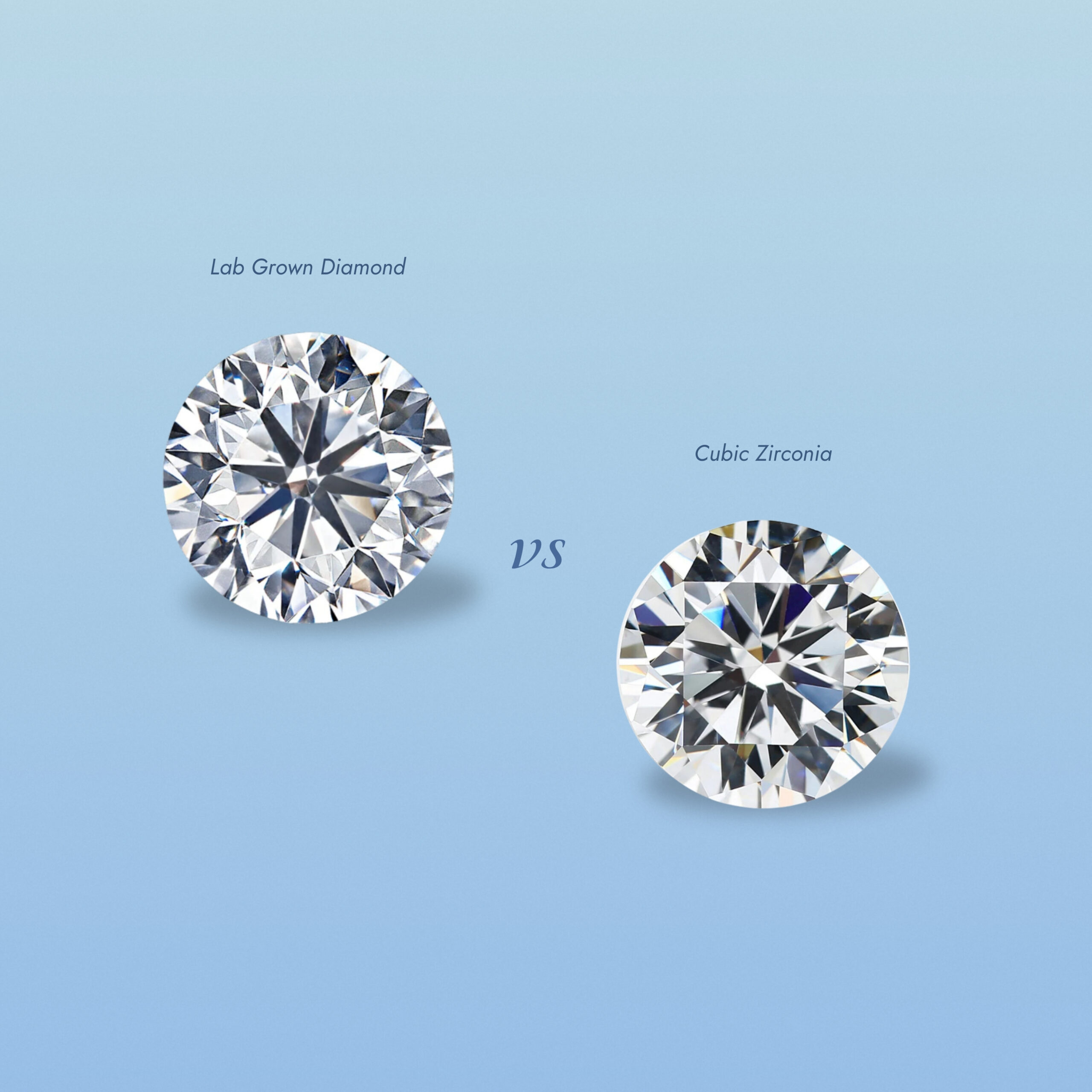
Lab-Grown Diamonds vs. Cubic Zirconia
- Cubic zirconia is a synthetic diamond made from zirconium dioxide, not carbon like diamonds.
- Cubic zirconia is designed to mimic the look of diamonds but lacks the same durability and brilliance due to its lower refractive index.
- Although it is popular and affordable, cubic zirconia is softer than diamonds, making it more prone to scratches and wear over time, and it isn’t as durable as lab-grown diamonds.
- These stones are less expensive and don’t hold value like diamonds, but they’re popular choices for fashion jewellery.
Lab-Grown Diamonds vs. Moissanite
- Moissanite is a naturally occurring silicon carbide, though most moissanites on the market are lab-created.
- Lab-grown diamonds and moissanite offer distinct differences despite their similar appearance. This gemstone has a high refractive index, which results in an intense, rainbow-like sparkle that some may find too flashy compared to the brilliance of diamonds.
- Moissanite is extremely hard, which is scoring close to diamonds, making it durable and resistant to scratches.
- As for the value, it is less expensive than diamonds but more expensive than cubic zirconia.
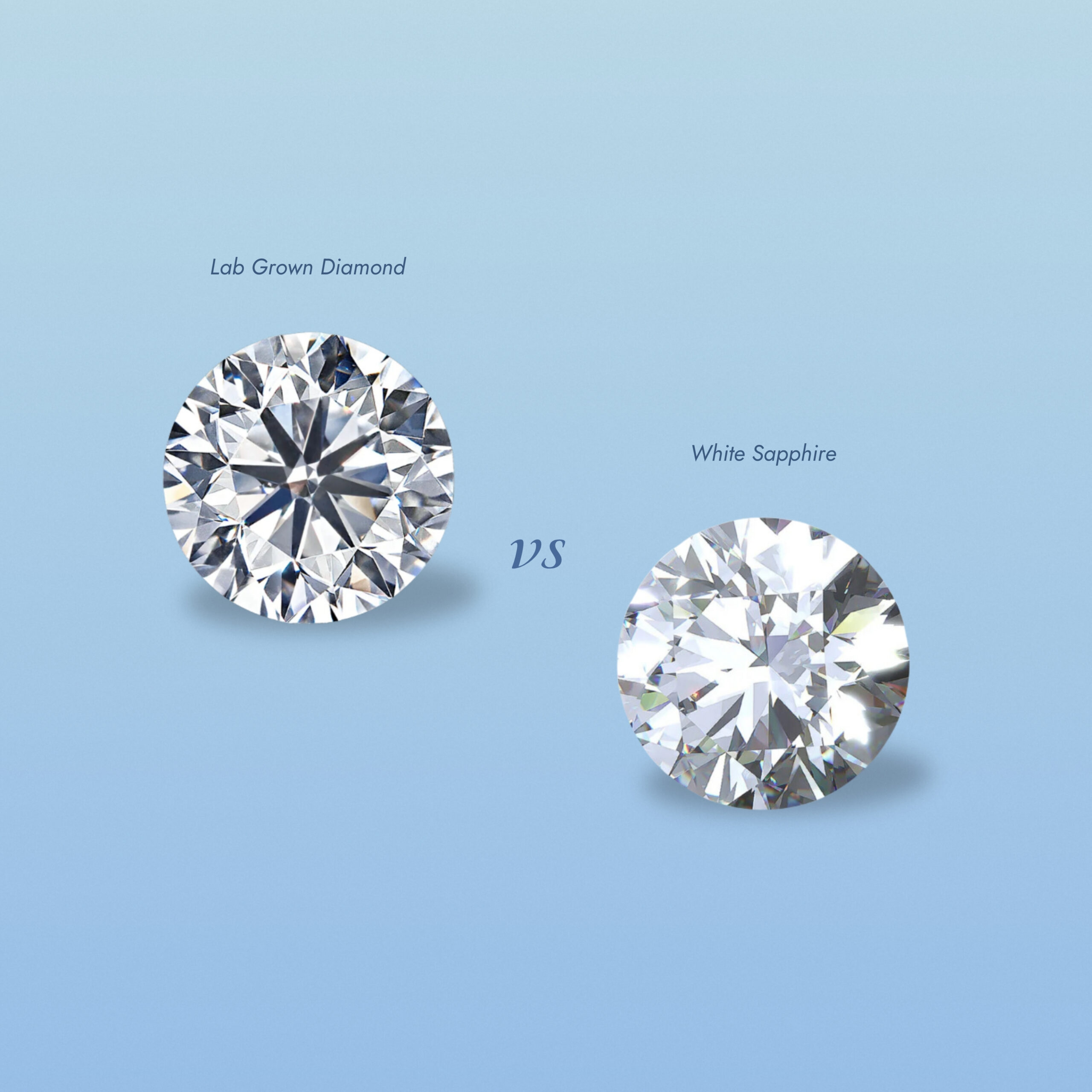
Lab-Grown Diamonds vs. White Sapphire
- White sapphire is a variety of the mineral corundum, composed primarily of aluminium oxide.
- As for the appearance, white sapphires can resemble diamonds; they have a more subdued sparkle and less brilliance due to a lower refractive index.
- This gemstone is durable, but it is slightly less resistant to scratches compared to diamonds.
- Although white sapphires are more affordable than diamonds, they offer a natural, yet less sparkly, alternative. They are often chosen for their durability and cost-effectiveness.